


The Cursed River of Odisha: Local Legends and Lost Treasure of the Baitarani River
High in the Guptaganga hills of Keonjhar district, where the forested slopes of Odisha give breath to the birthing stream...
Read moreDetailsHigh in the Guptaganga hills of Keonjhar district, where the forested slopes of Odisha give breath to the birthing stream...
Read moreDetailsWhen delegates assemble beneath the soaring canopy of the Amazon rainforest in COP30—scheduled from 10 to 21 November 2025 in...
Read moreDetailsA dawn that changed Caracas—and far more In the early hours of Saturday, January 3, 2026, residents of Caracas woke...
Read moreDetailsIn recent years, the phrase “Made in India” has evolved from a manufacturing label into a statement of innovation, trust, and...
Read moreDetailsOn 6 and 11 November 2025, the eastern Indian state of Bihar goes to the polls to elect all 243...
Read moreDetailsIntroduction: A Democracy in Motion India’s democracy is often described as a miracle — the world’s largest, most diverse, and...
Read moreDetailsWhen Elon Musk says the coming battle for artificial intelligence hardware will be an “all-out war,” he is not speaking...
Read moreDetailsOn a crisp morning in February 2025, a team of marine archaeologists from the Archaeological Survey of India (ASI) slipped...
Read moreDetailsHigh in the Guptaganga hills of Keonjhar district, where the forested slopes of Odisha give breath to the birthing stream...
Read moreDetailsWhen delegates assemble beneath the soaring canopy of the Amazon rainforest in COP30—scheduled from 10 to 21 November 2025 in...
Read moreDetailsA dawn that changed Caracas—and far more In the early hours of Saturday, January 3, 2026, residents of Caracas woke...
Read moreDetailsIn recent years, the phrase “Made in India” has evolved from a manufacturing label into a statement of innovation, trust, and...
Read moreDetailsOn 6 and 11 November 2025, the eastern Indian state of Bihar goes to the polls to elect all 243...
Read moreDetailsIntroduction: A Democracy in Motion India’s democracy is often described as a miracle — the world’s largest, most diverse, and...
Read moreDetailsWhen Elon Musk says the coming battle for artificial intelligence hardware will be an “all-out war,” he is not speaking...
Read moreDetailsOn a crisp morning in February 2025, a team of marine archaeologists from the Archaeological Survey of India (ASI) slipped...
Read moreDetails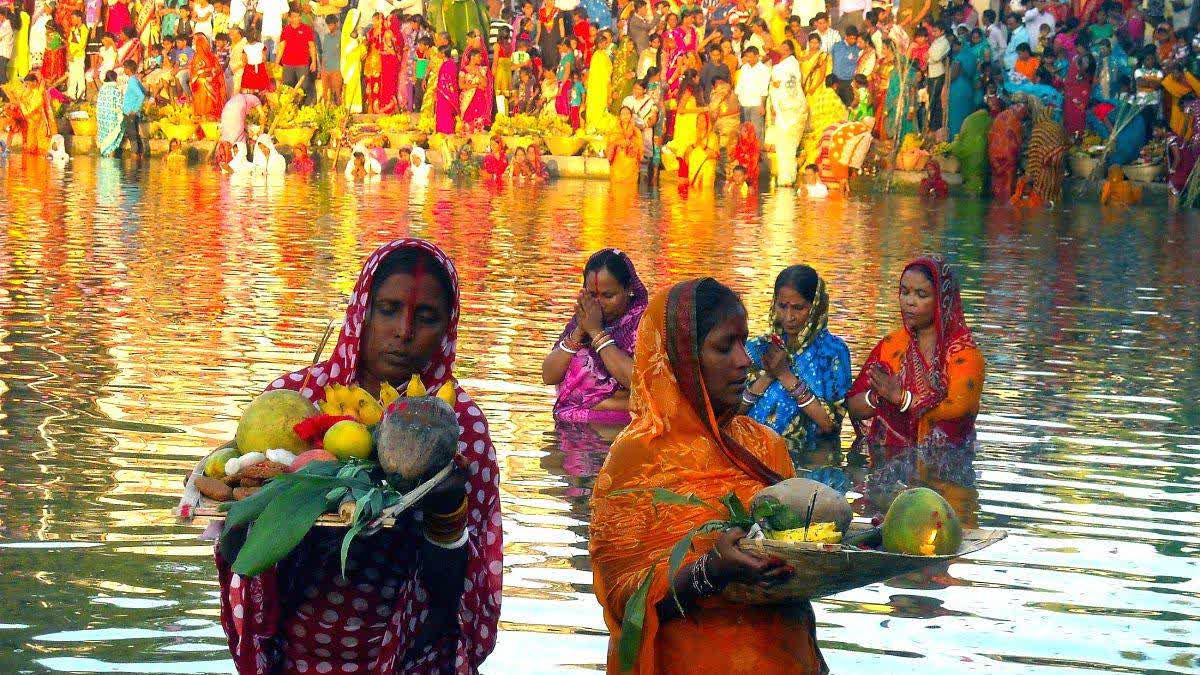
As dawn glimmers over water bodies in the Indian heartland and across migrant hubs in megacities, millions gather for Chhath Puja—a miracle of faith, endurance, and cultural unity unmatched in scale and depth. Families and entire communities, forged by shared ancestral ties, meticulously prepare for rituals revering the Sun God and Chhathi Maiya. Yet, beneath this vibrant celebration, tales of struggle, civic conflict, environmental consequence, and grassroots heroism rise up, painting a festival that’s as much about the spirit of collective resilience as it is about the quest for blessings.
Chhath Puja’s genesis stretches deep into Vedic antiquity, marking it as among the oldest surviving solar festivals. First described in the Rigveda’s invocations to the Sun and later in epics like Mahabharata, this four-day event, observed primarily in Bihar, Jharkhand, Uttar Pradesh, parts of Nepal, and among diaspora populations globally, has always centered around thanksgiving and nature’s cyclical gifts.
Ancient Legends: Brahma Vaivarta Purana and other Hindu texts narrate the story of Devasena (Chhathi Maiya), who graces worshippers with protection, fruitful offspring, and restored health. Tales also recall Draupadi and the Pandavas performing Chhath on sage Dhaumya’s advice, a myth that lends the festival its aura of penance and miraculous recovery.
Harvest and Healing: Occurring at the end of the monsoon and post-harvest, Chhath’s rituals double as prayers for bountiful crops, family wellbeing, and even community healing after disasters—rooted in both spiritual belief and lived experience.
Chhath Puja is distinguished by strict discipline and inclusivity. Unlike most Hindu festivals, Chhath rituals are egalitarian, cutting across caste, class, and gender.
Nahay Khay (Day 1): Devotees bathe in rivers, clean their homes, and prepare vegetarian prasad, initiating the process of purification.
Kharna (Day 2): A grueling day-long fast—no water or food—culminates in a night meal of jaggery, rice, and fruits. The fast is a test of resolve and a symbolic cleansing.
Sandhya Arghya (Day 3): Prayers and offerings (arghya) to the setting sun, performed at riverbanks, ponds, or even makeshift community ghats in urban settings; an occasion marked by elaborate displays of community support and togetherness.
Usha Arghya (Day 4): The conclusive offering to the rising sun, symbolizing renewal, hope, and gratitude for life itself.
Various anthropologists and medical researchers have studied Chhath’s rituals for scientific relevance:
Sunlight and Fasting: The long fasts, exposure to direct sunlight, and immersion in water have been linked to increased absorption of Vitamin D and potential detoxification, though exhaustive medical validation remains ongoing.
Environmental Awareness: Ritual cleanliness, refusal to use polluting materials in the prasad, and the turnout at natural water bodies have increasingly made Chhath a platform for environmental advocacy and campaigns against water pollution.

Chhath Puja is no longer limited to its origins in Bihar and eastern India. Migrant populations have exported traditions to metros, creating visible social identities.
Delhi: The capital now hosts over 1055 designated Chhath ghats, up from just 72 a decade ago, to accommodate the Purvanchali demographic, which forms nearly 30% of the city. Government investment, political promises, and logistical infrastructures—like overnight creation of artificial ponds—reflect the festival’s social weight.
Sambalpur, Odisha: Latest figures show more than 10,000 devotees converged for Sandhya Arghya, a record for the eastern region.
Government Support: State holidays for Chhath now span Bihar, Jharkhand, UP, and Delhi’s Yamuna banks, with millions in public expenditure devoted to crowd management, safety, and waste disposal.
Diaspora Celebrations: From Mauritius to the US, Chhath Puja is a marker of migrant cohesion, social capital, and heritage preservation.
Despite its spiritual focus, Chhath exposes infrastructural and governance gaps.
In 2025 alone, 12 lives were lost to drowning incidents linked to badly maintained or inaccessible river ghats, reigniting calls for better public safety and emergency management during festivals.
The annual influx at ghats stresses local civic bodies; past years have seen stampedes, crowd mismanagement, and recurring water pollution. State disaster authorities have issued advisories and established rapid response teams, but execution often lags behind intent.
Ground reports, like Dr. Afzal Ali’s viral investigation in West Champaran, have revealed public fund misuse—₹7.5 lakh stairways constructed nowhere near river water, due to planning lapses and alleged local corruption. Such exposés fuel demands for better accountability and real-time inspection.
In Delhi, allegations of “fake” Yamuna ghats—artificial pools filled with potable water for VIP rituals while ordinary devotees stand in polluted rivers—have spurred political mudslinging over festival management and voter appeasement.
The challenge of foam, chemicals, and solid waste in river Yamuna, Ganges, or other water bodies is acute. Delhi’s Water Ministry has resorted to chemical sprays to clear foam for rituals, provoking concerns about short-term fixes over sustainable solutions.
Environmentalists argue for stricter anti-pollution protocols, better solid waste management at ghats, and deeper community involvement in river rehabilitation, making Chhath an annual barometer of India’s environmental conscience.
Chhath fuels micro-economies—prasad sellers, ghat cleaners, transporters, cloth and bamboo artisans, and urban food entrepreneurs.
Local Economy: The festival injects crores into informal markets. In Patna and Varanasi alone, prasad sales (the unique “thekua” biscuit, fruits, and sugarcane), bamboo basket artisans, and temporary stall vendors report doubling of business around Chhath.
Migrant Identity: In metros, Chhath has seeded entire new business segments—imported produce, ghatside food stalls, transport services—elevating the visibility and material agency of Bihari, UP, and Jharkhand-origin communities.
Political Economy: Chhath is now a touchstone for Purvanchali political mobilization. Urban policymakers and parties leverage the festival to promise development, secure electoral support, and showcase inclusivity.
Chhath stands apart for its non-idolatrous worship, gender inclusivity, and fierce communitarian ethos.
No Pujari Required: Rituals are conducted by the devotees themselves, not priests—signifying a democratic spiritual process.
Women at the Forefront: Women take lead roles in organizing rituals, managing prasad, and leading community worship, often as symbolic heads of families during the festival.
Cross-Caste Harmony: Chhath is exemplary for breaking caste barriers and championing “sabka saath” (everyone together), as riverbanks and ghats become melting pots of social togetherness.
Urban Planner (Patna): “Every year, the logistics challenge grows. Ghats must be safe, eco-friendly, and accessible. We need smarter coordination with disaster authorities.”
Public Health Specialist (AIIMS Delhi): “Chhath’s massive scale highlights gaps in crowd control, water monitoring, and medical readiness. But it also offers models for preventive health through public mobilization.”
Devotee (Delhi, Yamuna Ghat): “We return every year, even if the water is polluted—our faith demands it. But we wish the government would do more than just optics.”
Environmental Activist (Bihar): “Chhath can become a powerful force for river revival if communities and the state work hand in hand—not just during these few days but all year round.”
Every Chhath is now a microcosm of India’s larger conflicts and resolutions—modernity versus tradition, rapid urbanization versus environmental crisis, spiritual unity grappling with political contest.
Urbanization: Makeshift and artificial ghats in metros raise questions about authenticity and resource allocation, but also allow migrant communities to maintain identity and traditions.
Environmental Restoration: Activists argue Chhath should be an anchor for annual clean-up drives, not just a festival but a movement for ecological justice.
Political Stakes: As Purvanchali voter influence grows in cities, festival management is increasingly politicized, sometimes overshadowing genuine public good.
Chhath Puja is far more than a ritual; it’s a transformative annual experience that binds generations and geographies, and ever more, socio-political, economic, and environmental destinies. Its old-world discipline meets meteoric contemporary challenges: from civic safety and corruption to environmental activism and cultural continuity. The festival’s core is simply faith—as radiant and life-giving as the sun.
The road ahead will test whether Chhath’s spirit of collective commitment can overcome political theatrics and developmental lapses to deliver not just safe, joyous celebrations, but also lasting improvements in public welfare and environmental stewardship.
High in the Guptaganga hills of Keonjhar district, where the forested slopes of Odisha give breath to the birthing stream...
Read moreDetailsWhen delegates assemble beneath the soaring canopy of the Amazon rainforest in COP30—scheduled from 10 to 21 November 2025 in...
Read moreDetailsA dawn that changed Caracas—and far more In the early hours of Saturday, January 3, 2026, residents of Caracas woke...
Read moreDetailsIn recent years, the phrase “Made in India” has evolved from a manufacturing label into a statement of innovation, trust, and...
Read moreDetailsOn 6 and 11 November 2025, the eastern Indian state of Bihar goes to the polls to elect all 243...
Read moreDetailsIntroduction: A Democracy in Motion India’s democracy is often described as a miracle — the world’s largest, most diverse, and...
Read moreDetailsWhen Elon Musk says the coming battle for artificial intelligence hardware will be an “all-out war,” he is not speaking...
Read moreDetailsOn a crisp morning in February 2025, a team of marine archaeologists from the Archaeological Survey of India (ASI) slipped...
Read moreDetails
Copyright © 2022-26 Myselfindia.com


