In a terse post on social media on October 30, 2025, Donald Trump declared: “Because of other countries’ testing programs, I have instructed the Department of War to start testing our Nuclear Weapons on an equal basis. That process will begin immediately.” Reuters+2CSIS+2
The terse message stunned observers: after more than three decades of self‑imposed U.S. nuclear‑explosive testing moratorium, this was a dramatic break. Within hours, capitals across the world were scrambling to decipher the implications—not only of the words, but of the geostrategic message they conveyed.
This announcement does not yet mark a mushroom‑cloud test. Indeed, U.S. officials soon clarified that no explosive warhead test was scheduled. AP News+1
But the damage to norms and the signaling effect may well exceed the technical detail. For experts, what is at stake is whether the post‑Cold War nuclear arms‑control order is unraveling—and whether the world is entering a new, more dangerous era of nuclear competition.
Testing the Waters: Unpacking the Lead
When a major nuclear‑armed power signals an intent to resume testing, the global reaction is not simply academic. The consequences ripple across treaty regimes, verification systems, regional deterrence balances, and public perceptions of existential risk.
The U.S. decision—as brief as the announcement was—is layered with multiple messages: to rivals such as China and Russia, to allies wondering whether deterrence still holds, and to non‑nuclear states hoping arms‑control can endure. Already, the international community is responding with alarm. The Comprehensive Nuclear‑Test‑Ban Treaty Organization (CTBTO) noted that “any explosive nuclear weapon test by any state would be harmful and destabilising for global non‑proliferation efforts and for international peace and security.” Reuters
In effect, what may appear for now as a rhetorical escalation could act as a pivot point, reshaping the nuclear order of the 21st century.
Historical Context: The Moratorium That Held (Until Now)
Understanding the magnitude of the current shift requires reviewing the arc of nuclear‑testing norms.
• From Atmosphere to Underground to Zero
The Partial Test‑Ban Treaty (PTBT, 1963) banned atmospheric, outer‑space and underwater tests by the U.S., U.K. and Soviet Union.
The Threshold Test Ban Treaty (TTBT, 1974) limited underground test yields.
The Comprehensive Nuclear‑Test‑Ban Treaty (CTBT, opened 1996) seeks to ban all nuclear‑explosive tests—yet it has never entered into force because key states (including the U.S., China and India) have not ratified. CSIS+1
• U.S. Moratorium and the Post‑Cold War Pause
The United States last carried out a nuclear‑explosive test in September 1992 and announced a unilateral moratorium thereafter. Reuters+1
For decades, U.S. doctrine and lab stewardship programmes assumed that no resumption was necessary to maintain the reliability of the stockpile. Indeed, the U.S. national labs affirmed that “the deployed nuclear stockpile remains safe, secure and effective without nuclear explosive testing.” CSIS
• Tension but Stability: Russia, China and Others
No state other than North Korea has conducted a nuclear‑explosive test since 1998; the Kremlin last tested in 1990; China in 1996. Reuters
That long hiatus underpinned a broad, albeit shaky, global consensus: nuclear‑explosive testing is unnecessary and counter‑productive. This norm acted as a barrier to qualitative and quantitative nuclear escalation.
What The Announcement Means: Strategic Signalling and Technical Realities
The Public Promise and the Subtext
Trump’s message that testing will “begin immediately” signals several intangible themes:
A challenge to perceived adversary advantage (China, Russia)
A reaffirmation of U.S. nuclear primacy and credibility
A willingness to reverse long‑standing restraint
A test of whether the architectural scaffolding of arms‑control can still hold
In a commentary, analysts at the Center for Strategic and International Studies (CSIS) noted: “The U.S. is unlikely to return to nuclear explosive testing any time soon; however, Trump’s post points to increasing nuclear competition between the United States, Russia and China.” CSIS
Technical Barriers and Institutional Realities
Despite the bold public language, returning to underground nuclear‑explosive testing is neither trivial nor instantaneous:
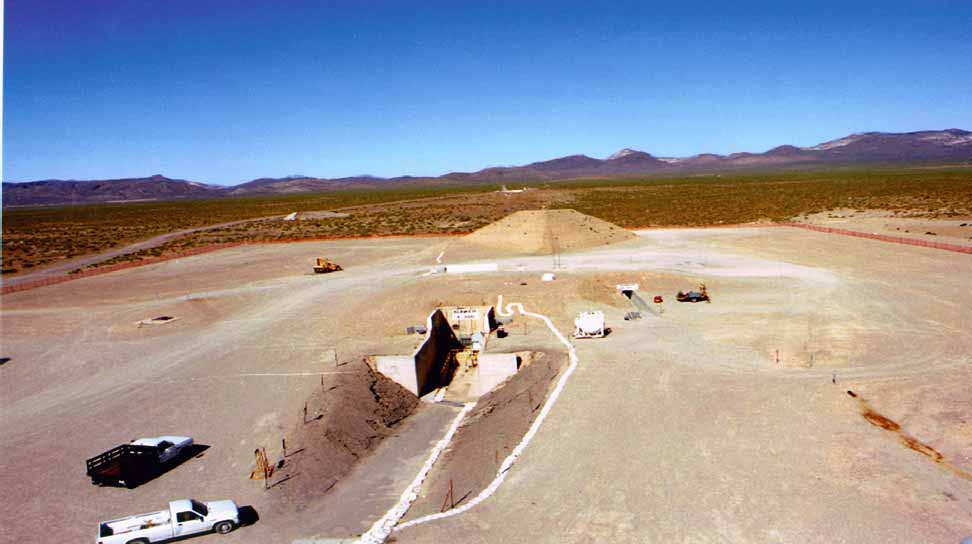
The U.S. readiness baseline assumes as much as 36 months to re‑start a full underground test programme at the former Nevada test site. CSIS
The National Nuclear Security Administration (NNSA) — the agency overseeing test‑readiness — has not requested dedicated funding for a full testing‐programme revival since 2010. CSIS
The political hurdle is high: public and congressional resistance to above‑ground detonations remain strong, especially given environmental and human‑health legacies of earlier tests. CSIS
Thus, unless explicitly stated otherwise, the phrase “testing” may imply non‑explosive “sub‑critical” or system‑component tests rather than full‑yield detonations. Indeed, U.S. Energy Secretary Chris Wright clarified on November 2 2025 that the upcoming tests would be “noncritical explosions” of parts, not nuclear detonations. AP News
Norms Under Strain
Even a non‑detonation test regime can fail to reassure other states. The signal that the U.S. is willing to break or stretch long‑standing moratoria damages the taboo around nuclear testing. As the CTBTO’s executive secretary warned: “Any explosive nuclear weapon test … would be harmful and destabilising for global non‑proliferation efforts.” Reuters
In effect, the norm of zero‑yield testing—long a cornerstone of arms control—may be undercut, eroding barriers to a broader nuclear spiral.
Global Reactions: Alarm, Doubt and Strategic Calculations
Russia and China: Two Responders
The Kremlin responded with caution and admonition: Russia told the U.S. to abide by its commitments under the moratorium and warned that any U.S. return to explosive testing could result in “mirror” measures. Reuters+1
China, facing a large but significantly smaller arsenal than the U.S. and Russia, urged Washington to uphold stability and respect testing‑restraint norms. Reuters
Allies and Arms‑Control Advocates
Allies in Europe and Asia registered concern and unease. The Financial Times described the U.S. policy pivot as raising “fears of global arms race”. Financial Times In South Asia and beyond, experts warned that emerging nuclear states may feel pressure to respond. ETGovernment.com
The arms‑control community, too, was swift to respond: Daryl Kimball of the Arms Control Association warned that “[Trump’s] directive … will only make the country and the world less safe and lead to a terrible new nuclear arms race.” Reuters
Regional Focus: South Asia and the Indo‑Pacific
In the volatile region of South Asia—home to India and Pakistan—analysts view the U.S. statement as potentially destabilising. With both states already engaged in nuclear deterrence postures, any signal of resumed testing by a major power can shift doctrinal and procurement calculations. ETGovernment.com
Meanwhile, in the Indo‑Pacific broader environment, U.S. allies such as Japan and South Korea may mull independent capabilities or extended deterrence assurances—raising the spectre of proliferation.
The Data at a Glance
| Parameter | Value / Comment | Source |
|---|
| U.S. nuclear‑explosive test moratorium since | 1992/early 1990s | Reuters+1 |
| U.S. declared warhead stockpile (2025) | ~5,225 warheads | Reuters |
| Russia declared warhead stockpile (2025) | ~5,580 warheads | Reuters |
| Time required for U.S. to be test‑ready (NNSA estimate) | Up to 36 months | CSIS |
| CTBT Signatures/Ratifications | 187 states signed; key states un‑ratified | CSIS |
Other datasets show increasing activity at China’s Lop Nor test site and Russian Novaya Zemlya facilities—indirect signals that the testing moratorium may have been under strain for years. CSIS
The Why, The When and The Risks
Why Now?
There are several converging motivators for the U.S. signal:
Adversarial pressure: Trump cited China and Russia’s nuclear activities—particularly in missile delivery and advanced systems—as motivating the testing directive. Reuters+1
Deterrence credibility concerns: With strategic competition heating, U.S. policymakers may fear erosion of nuclear‑capable deterrence.
Domestic politics and ballistic messaging: For a U.S. leader campaigning with a “tough on adversaries” posture, the statement fits a narrative of renewed great‑power assertiveness.
Arms control fatigue: The U.S. has already walked away from several treaties (e.g., INF, Open Skies). This may mark another step in a broader disarmament‑decoupling trajectory.
When Could Testing Actually Happen?
While the announcement signals intent, a return to actual explosive testing is unlikely imminently—and whether it occurs will depend on multiple factors:
Technical readiness (facility refurbishment, environmental safeguards).
Domestic political & congressional approval.
International reaction including sanctions, diplomatic blowback.
Strategic calculation: does the benefit outweigh the global cost?
Risks and “Cascade” Effects
Norm erosion: If the U.S. resumes testing, even component/partial tests, others may follow. The arrow of “who goes first” may convert into “who gets ahead.”
Regional arms‑races: Especially in Asia (South Asia, East Asia), states may feel compelled to upgrade.
Verification and trust breakdown: The global monitoring system centred on CTBTO may face strains if major powers resume testing.
Lowered threshold for use: Frequent or resumed testing can make the idea of nuclear use less unthinkable and shift crisis dynamics.
An Indo‑Pacific Illustration
In the Indo‑Pacific environment, the U.S.-China‑India triangle is heavily affected. China is estimated to have 600+ warheads and may hit 1,000 by 2030. Reuters India’s doctrine of credible minimum deterrence may come under pressure to modernise faster. Pakistan, meanwhile, may escalate to maintain parity. All of this reduces space for negotiation and crisis‑management.
Expert Perspectives and Citizen Reactions
Expert Voices
Heather Williams (CSIS): “Trump’s post raises alarm within the administration about the state of the United States’ nuclear enterprise … Nuclear testing is not the best step forward in that competition.” CSIS
Robert Floyd (CTBTO): “Any explosive nuclear weapon test by any state would be harmful and destabilising for global non‑proliferation efforts and for international peace and security.” Reuters
Daryl Kimball (Arms Control Association): “This is a reckless directive … will only make the country and the world less safe and lead to a terrible new nuclear arms race.” Reuters
Citizen & Regional Voices
In South Asia, retired Indian military officers and civilian analysts quoted in the Indian Express and Economic Times raised concern about the message the U.S. signal sends—particularly to Pakistan, which may feel fewer constraints on its own testing and deployment. ETGovernment.com
In Japan and South Korea, media commentary reflected anxiety about whether extended deterrence by the U.S. remains sufficient—and whether independent nuclear capabilities might be reconsidered (though still politically fraught).
Future Implications: What Lies Ahead?
If the U.S. follows through—or simply lets the normative shift stand—the strategic landscape could evolve in several possible ways.
Scenario 1: Component Testing Only (Short‐Term)
U.S. conducts non‑explosive/sub‑critical tests of warhead components and delivery systems.
Global norms take a blow, but no mushroom‑cloud tests.
Russia and China respond with missile and delivery systems, but stop short of explosive tests.
Arms race acceleration but no immediate detonations.
Scenario 2: Underground Explosive Tests Resumed (Medium‑Term)
U.S. refurbishes Nevada site and resumes underground detonations within 1‑3 years.
Russia and China follow suit; possibly India/Pakistan under pressure.
Global arms‑control treaties face existential crisis; CTBT becomes irrelevant.
Regional hotspots become more volatile (South Asia, Middle East, East Asia).
Scenario 3: Full‑Blown Nuclear Reset (Long‑Term)
Multiple nuclear‑armed states resume regular testing.
Qualitative leaps in warhead and delivery systems appear.
Crisis stability erodes; war‑fighting postures degrade.
Non‑nuclear states reconsider proliferation options; global non‑proliferation regime unravels.
What Can Be Done?
Renewed diplomacy: restart bilateral and multilateral arms‑control talks (U.S.–Russia, U.S.–China).
Strengthen verification: enhance CTBTO monitoring, seismic/infrasound arrays, remote sensors.
Encourage regional dialogues: particularly in South Asia, where risk of escalation is high.
Public transparency: greater clarity about what the U.S. means by “testing” (component vs explosive).
Civil society and media pressure: highlight the catastrophic humanitarian risk of nuclear weapons.
A Historic Fork in the Road
President Trump’s announcement marks more than a policy statement—it may signal a strategic turning‑point: from nuclear restraint to renewed competition. Though no exploded warhead has yet been unleashed, the mere willingness to break—or bend—the longstanding taboos is deeply consequential.
For the global order, it means trust in decades‑old norms is eroding. For regional deterrence dynamics, it means the bar may be lowered and that a ripple in one corner may echo across many. For the average citizen, it means living in a world where the nuclear shadow—though always present—feels a little sharper, a little less distant.
Whether this moment becomes the start of a belated new Cold War, or remains a symbolic gesture without explosive follow‑through, will depend on strategic decisions by a few powerful states. But the change has already begun—quietly, strategically and portentously. The “new nuclear age” may not yet be upon us, but the warning lights are flashing.