


17 जिहाद का भारत पर कब्जा | हिंदू सर्वनाश की साज़िश | Akshat Gupta
देश में सामने आ रही कई गंभीर घटनाएँ एक बड़ा सवाल खड़ा करती हैं क्या हम सच बोलने से...
Read moreDetailsदेश में सामने आ रही कई गंभीर घटनाएँ एक बड़ा सवाल खड़ा करती हैं क्या हम सच बोलने से...
Read moreDetailsIn a move that blends policy ambition with institutional recognition, NTPC Green Energy Ltd (NGEL), a subsidiary of the Maharatna...
Read moreDetailsIntroduction – The Spark of a Thousand Stories Agar aapne 80s ya 90s me Diwali dekhi hai, toh aapko...
Read moreDetailsआज के episode में बात होगी उन खबरों और रहस्यों की… जिन्होंने पूरी दुनिया को चौंका दिया। बंगाल की राजनीति...
Read moreDetails1. The Call of Faith: Where Earth Meets the Divine In the quiet landscape of Bundelkhand, where the wind hums...
Read moreDetailsA Quiet, Unexpected Shift in Workplaces Around the World When Delhi-based UX designer Naina Arora received an unexpected office memo...
Read moreDetailsAt a high-profile public gathering in New Delhi this week, the Bharatiya Janata Party-led Union government once again declared women’s...
Read moreDetailsWhen the Union Labour Ministry fixed 21 November 2025 as the operational target for the long-delayed labour codes, a quiet...
Read moreDetailsदेश में सामने आ रही कई गंभीर घटनाएँ एक बड़ा सवाल खड़ा करती हैं क्या हम सच बोलने से...
Read moreDetailsIn a move that blends policy ambition with institutional recognition, NTPC Green Energy Ltd (NGEL), a subsidiary of the Maharatna...
Read moreDetailsIntroduction – The Spark of a Thousand Stories Agar aapne 80s ya 90s me Diwali dekhi hai, toh aapko...
Read moreDetailsआज के episode में बात होगी उन खबरों और रहस्यों की… जिन्होंने पूरी दुनिया को चौंका दिया। बंगाल की राजनीति...
Read moreDetails1. The Call of Faith: Where Earth Meets the Divine In the quiet landscape of Bundelkhand, where the wind hums...
Read moreDetailsA Quiet, Unexpected Shift in Workplaces Around the World When Delhi-based UX designer Naina Arora received an unexpected office memo...
Read moreDetailsAt a high-profile public gathering in New Delhi this week, the Bharatiya Janata Party-led Union government once again declared women’s...
Read moreDetailsWhen the Union Labour Ministry fixed 21 November 2025 as the operational target for the long-delayed labour codes, a quiet...
Read moreDetails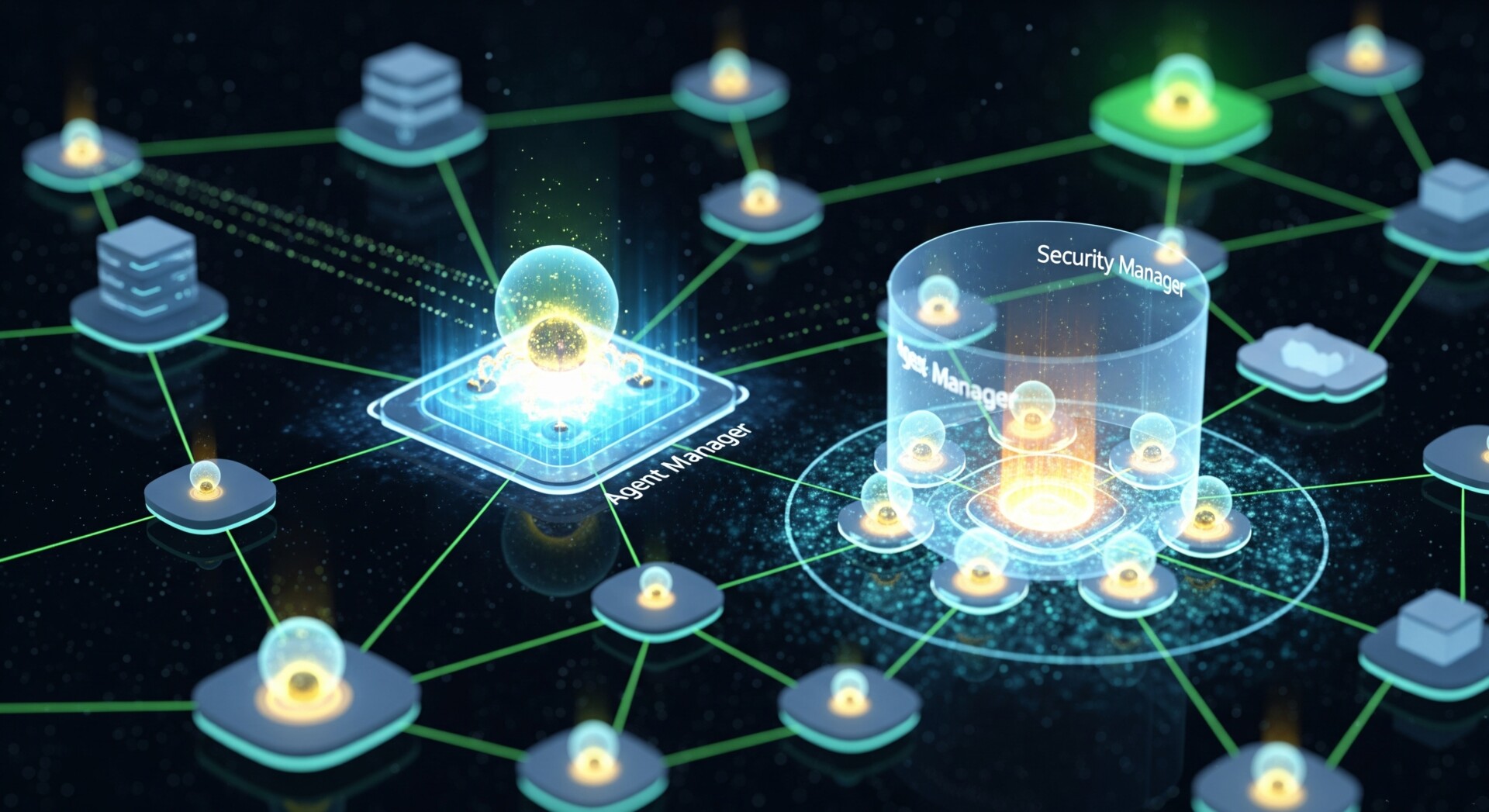
In late 2025, a Bengaluru-based product manager named Raghav Sharma noticed something unusual on his phone. Tasks he once performed through a carousel of apps — booking a cab, checking his trading portfolio, ordering groceries — had begun happening through a single conversational interface. Not a virtual assistant, not a chatbot, but a persistent AI agent capable of acting on his behalf.
“It felt like my phone suddenly became a person,” he says. “I didn’t open apps. I asked for outcomes.”
This shift, once the stuff of speculative panels at technology conferences, has grown into the defining digital transition of 2026. For the first time since the Apple-Google duopoly cemented the app-store era, the foundation of the smartphone economy is being questioned. Across India’s urban clusters — from Gurugram’s cyber parks to Hyderabad’s startup corridors — AI agents are replacing the once-untouchable app model.
No explosions. No grand announcements. Just an irreversible reshaping of how a billion Indians interact with their devices.
The rise of AI agents challenges an industry that dominated digital life for over a decade. The “app era,” which began around 2010, built fortunes for food delivery firms, fintech unicorns and global consumer-tech giants. The average Indian smartphone user had nearly 70 apps installed by 2022, opening at least four dozen daily.
That number plunged sharply in 2025.
Internal data shared by a major Indian telecom operator shows that app launches per user dropped by 23% between January and November 2025. The steepest fall? Utility apps — including calendars, banking, payments, ticketing and personal finance tools — categories now easily handled by an always-on AI layer integrated into major operating systems.
The shift accelerated after flagship smartphone brands baked system-level AI agents directly into their devices. These agents did not “suggest” apps. They bypassed them entirely, executing tasks on behalf of users through APIs, permissions and pre-authorized workflows.
For an industry dependent on app engagement to drive advertising, subscriptions and transaction volumes, the change felt existential.
Until 2024, the biggest debate in Indian tech circles centered on data privacy, regulation of digital payments and the rise of homegrown app ecosystems. Few anticipated that the problem threatening the future of apps would be their redundancy.
AI agents operate on a fundamentally different principle:
Users do not “open” anything. They delegate.
A user says, “Plan my week.”
The agent reads emails, schedules meetings, blocks travel time, books a cab for the morning commute, adjusts alarms and even orders a replacement charger if the battery health report shows degradation.
No icon tapping. No navigation through menus. No notifications flood.
A senior product designer at a major Indian fintech app describes it bluntly:
“We didn’t lose customers. We lost their attention. And attention is the currency apps run on.”
Industry analysts point to four converging forces:
1. System-Level Integration of AI Agents
When smartphone operating systems began packaging agents similar to India’s growing stable of homegrown models, apps became optional. The OS had direct access to data flows apps previously controlled.
2. API Explosion and Unified Permissions
Government-led consent frameworks, including updates to India’s Digital Personal Data Protection Act (DPDPA), introduced modular consent blocks. AI agents could request, store and reuse permissions for multiple tasks, eliminating repeated app-based approvals.
3. Decline of Search-Based Digital Behavior
The AEO (Answer-Engine Optimization) movement changed how users searched. Instead of browsing, people demanded direct results — a pattern perfectly suited to AI agents, not apps.
4. Economic Pressure on App Businesses
With rising customer acquisition costs and falling retention, Indian startups struggled. When agents started completing tasks on their interfaces without users opening them, their entire monetization logic — from banner ads to subscription nudges — collapsed.
A Mumbai-based startup founder summarises the shift:
“When agents became the gatekeepers, apps lost their storefront.”
By mid-2026, a phone feels less like a collection of software and more like a personalized command center. AI agents operate in layers:
• Personal Agent: Manages errands, schedules, finances and messages.
• Work Agent: Handles documents, coordinates meetings, prepares reports, drafts emails.
• Commerce Agent: Compares prices across platforms, negotiates discounts, schedules deliveries.
• Device Agent: Monitors battery health, system performance and personalized security profiles.
These agents interact with each other, not merely the user.
A Delhi-based cybersecurity consultant explains how this mutually aware system works:
“My work agent knows my personal agent has blocked the afternoon because my doctor’s agent booked a routine checkup. No apps involved. The system simply… syncs.”
India’s app economy once employed lakhs of designers, product managers, engineers and marketers. Today, the demand is shifting — not disappearing.
Developers are now building “skills,” “actions” and “micro-APIs” for agents rather than full-scale applications.
Instead of designing ten screens, a team designs “intents” like:
• Pay electricity bill
• Reorder monthly groceries
• Track SIP investments
These intents plug into the agent layer, invisible to the user.
A senior official at MeitY says discussions are underway to create a national agent API registry ensuring transparency, compliance and fair access. The idea is to prevent large AI corporations from monopolizing the interaction ecosystem — a fear increasingly voiced by Indian startups.
Three key policy areas are emerging:
1. Transparent Decision-Making
If an agent chooses Ola over Uber or Amazon over Flipkart, who decides? Government regulators want algorithms to reveal “commercial influence disclosures.”
2. Privacy and Consent Stacking
India’s DPDPA mandates explicit purpose-based consent, but agents blur purposes. Calls for a refreshed consent architecture are growing.
3. Competition Law Refocus
The Competition Commission of India (CCI) is examining whether AI agents constitute a new “bottleneck monopoly,” similar to app stores a decade earlier.
A legal expert based in Delhi warns,
“We solved the app-store monopoly after years. Agent monopolies might rise faster than policymakers can react.”
Indians who once switched between apps for everything now rely on persistent digital companions. This shift is most visible among:
• Elderly citizens: Agents simplify digital tasks, increasing tech accessibility.
• Rural users: Low-literacy regions benefit from voice-based agents that bypass complex UI design.
• Students: Agents summarize study material, manage submissions, and track learning schedules.
• Freelancers & gig workers: Personalized financial and scheduling agents reduce daily friction.
But there are concerns.
Dependence is rising. Decision fatigue has decreased — but so has personal agency. Some educators fear younger users may rely too heavily on automated choices, missing essential learning experiences.
Tech leaders and researchers offer mixed views.
A national telecom executive:
“This is the biggest shift since 4G. Data consumption is rising, but app usage is flattening. The next decade belongs to agents, not icons.”
A senior AI researcher in Chennai:
“We’ve replaced pages with predictions, screens with intent. But prediction engines are only as unbiased as the datasets behind them.”
A Pune-based UX designer:
“We spent years perfecting interfaces people loved. Now the best interface is no interface.”
The businesses struggling most are the ones that depend on daily user engagement:
• Food delivery
• Fintech wallets
• OTT platforms
• E-commerce marketplaces
Many are rethinking themselves as “agent-ready service nodes.”
For example:
A food delivery company in Bengaluru partnered with device manufacturers to create hyper-optimized agent actions. Instead of nudging users to open the app and browse, the agent analyzes dietary patterns, budget, time of day and location to suggest meals automatically.
OTT platforms are building “story agents” that generate recommendations based on viewing mood detection — collected through ambient signals like screen time, camera-assisted emotional analysis and conversation summaries.
Fintech firms fear the biggest loss. Without users opening the app, cross-selling evaporates.
A veteran banking executive says,
“When the agent decides the best loan for the customer, branding dies. We all become invisible utilities.”
India’s smartphone base — over 860 million users — gives it the world’s largest potential agent market. Global companies are rapidly localizing their models for Indian languages, contexts and regulatory expectations.
Local startups are not far behind; at least 42 Indian AI agent startups raised funding in 2025, focusing on vernacular agents, agriculture assistants, logistics automation and decentralized personal-data vaults.
Industry watchers believe India could shape the world’s agent standards, much as UPI transformed global fintech thinking.
The shift away from apps is only beginning. Analysts predict three macro trends:
1. Phones Will Become OS-Agnostic Hubs
The agent becomes the OS. Hardware becomes interchangeable. Loyalty shifts from brand to behavioral personalization.
2. Human-AI Symbiosis Will Deepen
Agents will proactively anticipate needs, negotiate with other agents and even coordinate tasks without explicit prompts.
3. App Stores Will Transform into Agent Skill Stores
Dozens of Indian startups are already building “skill packs” — bundles of micro-capabilities for agents.
But the battle lines are drawn.
Tech giants want control.
Governments want oversight.
Users want convenience without manipulation.
The future will depend on whether society can balance autonomy with automation, transparency with personalization — a delicate equilibrium that technology alone cannot guarantee.
By the time Raghav checks his phone again, his agent has already handled nine tasks: emailed his team, paid his rent, drafted a trip itinerary and ordered a refill of his asthma inhaler.
He didn’t touch an app.
For him — and increasingly for millions of Indians — the age of apps has begun to feel like an era from another lifetime. The agent has taken over, quietly, efficiently, invisibly.
And the smartphone, once a grid of colorful icons, has transformed into something entirely new:
A digital extension of human intent.
देश में सामने आ रही कई गंभीर घटनाएँ एक बड़ा सवाल खड़ा करती हैं क्या हम सच बोलने से...
Read moreDetailsIn a move that blends policy ambition with institutional recognition, NTPC Green Energy Ltd (NGEL), a subsidiary of the Maharatna...
Read moreDetailsIntroduction – The Spark of a Thousand Stories Agar aapne 80s ya 90s me Diwali dekhi hai, toh aapko...
Read moreDetailsआज के episode में बात होगी उन खबरों और रहस्यों की… जिन्होंने पूरी दुनिया को चौंका दिया। बंगाल की राजनीति...
Read moreDetails1. The Call of Faith: Where Earth Meets the Divine In the quiet landscape of Bundelkhand, where the wind hums...
Read moreDetailsA Quiet, Unexpected Shift in Workplaces Around the World When Delhi-based UX designer Naina Arora received an unexpected office memo...
Read moreDetailsAt a high-profile public gathering in New Delhi this week, the Bharatiya Janata Party-led Union government once again declared women’s...
Read moreDetailsWhen the Union Labour Ministry fixed 21 November 2025 as the operational target for the long-delayed labour codes, a quiet...
Read moreDetails
Copyright © 2022-26 Myselfindia.com


