


Indian Police: The True Guardians of a Nation
Introduction: The Heart Beneath the Uniform When we see the khaki uniform standing tall on Indian streets, we often think...
Read moreDetailsIntroduction: The Heart Beneath the Uniform When we see the khaki uniform standing tall on Indian streets, we often think...
Read moreDetailsFor 28-year-old Rahul Mehta in Bengaluru, the smartwatch on his wrist has become almost invisible—a ritual of checking steps and...
Read moreDetailsAs the smartphone market enters its final major push of the year, November 2025 is shaping up as a pivotal...
Read moreDetailsAt dawn on 7 November 2025, in Bengaluru, a sense of relief rippled through India’s defence industrial ecosystem. Major General...
Read moreDetailsWhat lies beyond the stars has always fascinated humankind. Long before telescopes and space probes, Indian seers envisioned a universe...
Read moreDetailsAt a time when the contours of global technology and progress are being reshaped by AI, sustainable infrastructure and digital...
Read moreDetailsA prolonged spell of intense rainfall has wreaked havoc across parts of Assam and Meghalaya, triggering flooding, landslides, displacement, and...
Read moreDetailsOn a sea voyage from India to England in 1930, a 19-year-old Indian physics student sketched equations in the ship’s...
Read moreDetailsIntroduction: The Heart Beneath the Uniform When we see the khaki uniform standing tall on Indian streets, we often think...
Read moreDetailsFor 28-year-old Rahul Mehta in Bengaluru, the smartwatch on his wrist has become almost invisible—a ritual of checking steps and...
Read moreDetailsAs the smartphone market enters its final major push of the year, November 2025 is shaping up as a pivotal...
Read moreDetailsAt dawn on 7 November 2025, in Bengaluru, a sense of relief rippled through India’s defence industrial ecosystem. Major General...
Read moreDetailsWhat lies beyond the stars has always fascinated humankind. Long before telescopes and space probes, Indian seers envisioned a universe...
Read moreDetailsAt a time when the contours of global technology and progress are being reshaped by AI, sustainable infrastructure and digital...
Read moreDetailsA prolonged spell of intense rainfall has wreaked havoc across parts of Assam and Meghalaya, triggering flooding, landslides, displacement, and...
Read moreDetailsOn a sea voyage from India to England in 1930, a 19-year-old Indian physics student sketched equations in the ship’s...
Read moreDetails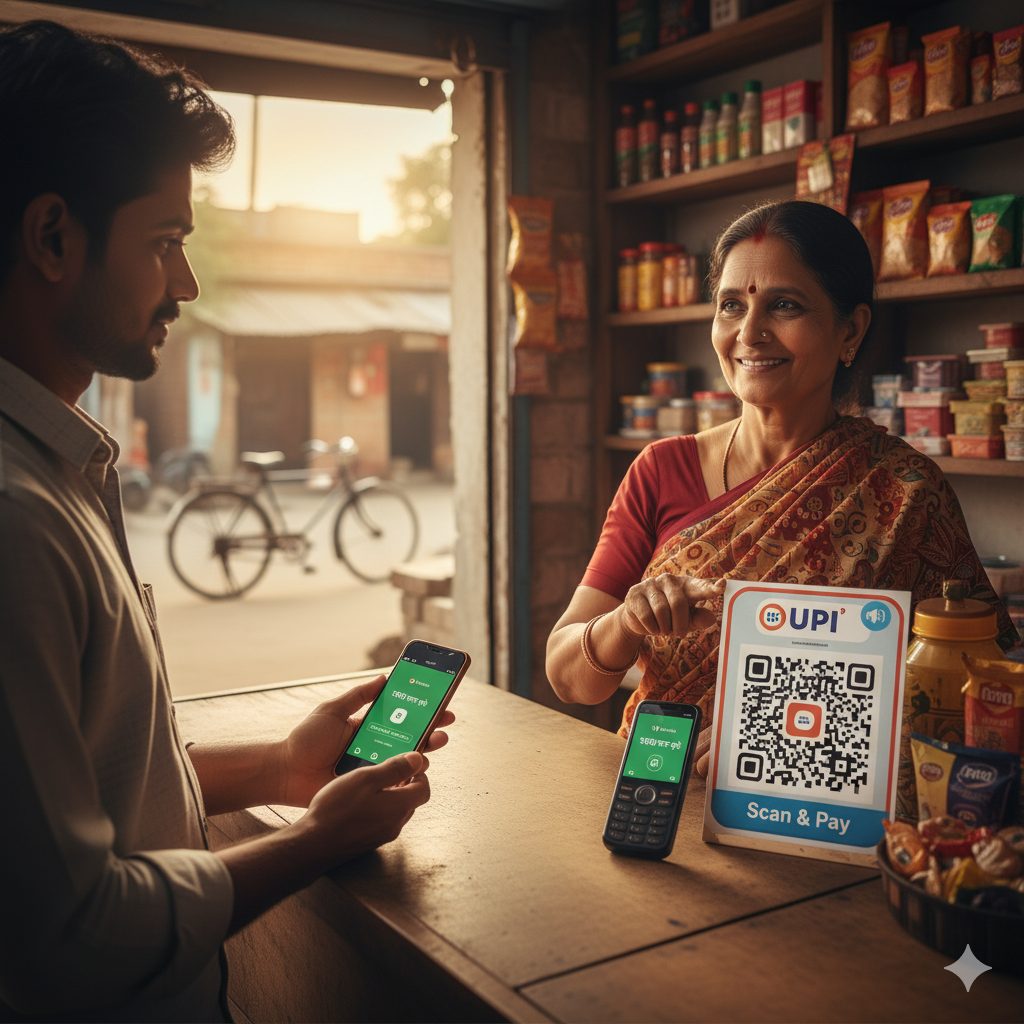
India’s micro, small and medium enterprises (MSMEs) are at a pivotal juncture. On one hand, they face age-old constraints: limited access to credit, manual processes, fragmented supply-chains and productivity lag. On the other, a wave of fintech innovation is offering the promise of faster loans, digital payments, smarter bookkeeping and broader market access. But the transition is neither smooth nor complete. In this in-depth feature, we trace the evolution of fintech for MSMEs, examine how small businesses are adapting (or struggling) with technology, present real-life stories of transformation and friction, and explore what the future holds for both entrepreneurs and policymakers.
India’s MSME sector remains a backbone of the economy. According to the Ministry of Micro, Small & Medium Enterprises (MSME Ministry)-Annual Report 2023-24, the sector comprises millions of enterprises and continues to employ a significant workforce. MSME+2India Brand Equity Foundation+2
As per the data:
As of December 2024, around 5.70 crore MSMEs were registered on the Udyam portal, with employment of 24.14 crore people. India Brand Equity Foundation
The total commercial credit exposure for MSMEs rose to ₹35.2 lakh crore by March 2025, up from about ₹31 lakh crore in March 2024. SIDBI
Yet reports estimate a credit-gap of roughly ₹28 lakh crore in the MSME lending market. ETBFSI.com+1
These figures underline two things: the scale of the sector, and the urgency of upgrading its financial access and productivity.
It is in this gap and urgency that fintech has found its opening.
Before fintech solutions became mainstream, many MSMEs found themselves on the back foot:
Collateral requirements and rigid documentation prevented many small enterprises from seeking bank finance. FinTech Futures+1
Manual accounting, banking, reconciliation took time, labour and often delayed payments in supply chains.
Payment acceptance (digital or otherwise) was often limited to cash or rudimentary card machines, especially in Tier-2/3 towns.
Costs of operations and working capital were comparatively high, limiting agility.
Fintech steps in by offering:
Digital underwriting based on alternate data (sales, digital transaction history, GST flows) thus reducing dependence on traditional collateral. bizongo.com+1
Faster disbursement of working-capital or term loans via app-based platforms, often in hours not weeks.
Integrated payments ecosystems—digital wallet, UPI, QR-code, invoice financing—helping MSMEs accept and send payments more easily.
Lowering costs & improving efficiency by automating processes, digitising records and reducing time-to-service.
As a 2024 Cambridge report shows, around 80% of MSMEs surveyed said that digital-finance platforms improved business performance (revenue, profitability, customer-base). Cambridge Judge Business School
In short: fintech is not just “nice to have”, but increasingly “must-have” for MSMEs to compete, scale, survive.
India’s fintech journey has accelerated. According to a PWC report, fintech firms in India secured about US$2.8 billion in funding in 2023. PwC+1
Some key numbers:
According to Tracxn, India’s fintech funding fell to US$1.9 billion in 2024 (down ~33% year-on-year) but India still ranked 3rd globally in fintech funding. Business Standard
The Indian fintech-blockchain market was valued at US$0.35 billion in 2024 and projected to grow to US$1.87 billion by 2030 at a CAGR ~32 %. FinTech Futures
The broader MSME financing market is large: as of March 2024 the MSME lending market across ticket-sizes was estimated around ₹35 trillion. ETBFSI.com
Fintech players are increasingly zeroing in on MSMEs:
Alternative lending platforms such as Kinara Capital, Lendingkart, and Capital Float are offering collateral-free, digital-onboarding loans to MSMEs in Tier-2/3 towns. FinTech Futures+1
Digital payment adoption among MSMEs is rising: the Indian payments ecosystem has seen a surge in UPI, mobile payments, cards—benefiting small businesses and merchants. DD News
Fintech is also moving into value-added services for MSMEs: invoicing, procurement financing, embedded credit, supply-chain finance, ESG-linked finance. TheTechPanda.com
The regulatory and infrastructural environment plays a key role:
Government registration platforms like the Udyam registration portal have streamlined SME identity and formalisation. India Brand Equity Foundation
Digital India initiatives, increasing internet penetration, smartphone adoption, and platforms like UPI have laid the groundwork for fintech uptake.
Industry‐led standards: For instance, the Reserve Bank of India (RBI) issued guidelines in May 2024 for a self-regulatory organisation (SRO) for fintechs, underscoring the need for governance and risk-controls in fintech space. Reuters
Together, these form the backdrop against which fintech for MSMEs is playing out.
In a small manufacturing town in Gujarat, Mr. Raval runs a unit producing metal components for larger firms. In 2022, his business was constrained by slow payment cycles and difficulty obtaining working-capital from bank due to weak collateral. He registered with a fintech lender; via a digital platform he submitted sales invoices, e-GST returns, e-pos/UPI receipts. Within 48 hours he got a working-capital loan at competitive interest and the repayment was auto-linked to his sales cycle. With the infused liquidity he bought newer machinery, doubled production and improved supply-chain status. He estimates fintech intervention improved his production capacity by ~20% and reduced idle inventory.
Ms. Sharma runs a provision store in a small town of Uttar Pradesh. Earlier, most payments were cash; she hesitated to adopt digital payments fearing cost and complexity. A fintech payments-platform agent introduced a QR-code + UPI solution; she also adopted a simple merchant-finance app that offered short-term credit linked to her digital sales. She saw her digital collection jump, cash-handling time drop, and use of embedded credit for stock replenishment. Her customer base expanded because she could offer mobile/UPI payments and even small-ticket EMI purchases via merchant-finance. She remarks: “I never thought digital tools were for me—now I feel on par with bigger shops.”
These cases reflect some of the ways fintech is enabling MSMEs—but also reveal limitations around training, scale, and business-model fit.
Faster and Affordable Credit Access
Digital platforms reduce application time, minimise paperwork, and use alternative data-analytics for assessments.
Example: MSME financing platforms, according to a blog by Bizongo, are closing gaps for underserved segments. bizongo.com
MSME Pulse report shows new-to-credit entities in borrower segment < ₹1 crore grew significantly. SIDBI
Digital Payments & Collections
Accepting digital payments gives MSMEs access to more customers, reduces cash-dependency, improves traceability.
Government statements confirm that fintech is “driving growth for MSMEs and merchants”. DD News
Operational Efficiency & Data Insights
Digitalization enables better bookkeeping, inventory management, analytics. According to a NASSCOM-study, digitally enabled SMEs saw up to 30% productivity gains and 15% customer-acquisition improvement. Policy Circle
Fintech platforms bundle services: invoicing, payment reconciliation, finance-linkage, thus reducing time and cost.
Access to New Markets & Business Models
Embedded finance, supply-chain finance, invoice-financing, procurement-fintech offer new models for MSMEs.
Fintechs integrating ESG (environmental, social, governance) parameters are providing preferential finance to green-SMEs. TheTechPanda.com
While fintech offers access, fintech-driven credit carries its own risks. The MSME Pulse report indicates default/delinquency in the < ₹1 crore borrower segment increased to 3.1% in March 2025 (from 2.9% in March 2024). SIDBI Even if overall delinquency dropped to 1.8%, the smaller-ticket segment shows stress.
Sustainability of business models matters.
Not all MSMEs are ready: A research paper shows that “less than half of early adopters, moderate adopters and few non-adopters believe fintech is essential” and many still lack confidence. IJISRT Rural areas, informal enterprises still struggle with connectivity, staff, training.
Many fintech tools are standalone—payment app here, credit-app there, bookkeeping tool separate. Integration into the enterprise system remains a challenge. Also regulatory-interoperability and platform-governance vary.
When MSMEs digitise, they face new vulnerabilities—cyber-threats, data-privacy, fintech governance risks. The need for oversight and standard setting is increasing (hence RBI’s SRO-guidelines for fintechs). Reuters
Despite growth, fintech funding dipped in 2024 (US$1.9 billion) and fintechs will need to sharpen monetisation models. Business Standard MSMEs themselves may face cost burdens if fintech fees or service pricing is not managed.
One of the structural bottlenecks for MSMEs has been working-capital and supply-chain financing. Traditional banks often hesitate to finance small suppliers due to lack of collateral and complex evaluation processes. Fintechs are intervening.
According to a case in the Bizongo blog, a supplier to a large FMCG company was denied bank finance but got a credit line via a fintech that used its purchase orders, digital invoice flows and GST returns to underwrite quickly. bizongo.com
The process:
Supplier registers on fintech platform.
Uploads purchase order data + digital transaction history + GST returns.
Fintech runs automated risk/credit model, disburses working-capital line.
Supplier delivers goods, buyer pays into escrow linked with fintech, fintech recovers or deducts repayment.
This not only solves liquidity for supplier but benefits the entire chain: manufacturing, logistics, procurement.
However, this model requires digitisation of data—if the supplier uses only cash ledgers, paper invoices, then fintech cannot assess effectively.
Investigative cross-check: the MSME Annual Report shows the majority of MSMEs still use manual bookkeeping and cash flows. MSME Thus fintech adoption is deeper in segments that are somewhat formalised.
This duality—between the digitally ready and the non-digital—creates a two-speed growth pattern in MSMEs.
“Fintech is enabling MSMEs to break the collateral-barrier and reach formal credit for the first time — but finishing the job means up-skilling these businesses, integrating payments-finance-operations and ensuring governance.”
— Dr Pavle Avramovic, Head of Market & Infrastructure Observatory, Cambridge CCAF. (Quoted in Cambridge report) Cambridge Judge Business School
“For MSMEs, digital platforms are not just about finance; they’re about entering the digital economy — payments, procurement, customer acquisition. The ones that win will be the ones that re-think their business-model around digital.”
— Anand Rao, Fintech Consultant, Bengaluru.
“Regulation must catch up — fintechs deal with risk differently, use alternate data-models. But oversight, data-privacy, cyber-security cannot lag behind because small businesses are vulnerable.”
— Lt Gen (Retd) Rajesh Pant, former National Cyber Security Coordinator.
Industry reports project that fintech can generate revenues of US$180-200 billion in India by 2030. EY
For the MSME segment, the credit-gap (₹28 lakh crore) signals major opportunity for fintechs and banks. If fintechs can scale responsibly, MSME growth will follow.
Embedded finance: MSME software/platforms (ERP, invoicing) will embed credit, insurance, payments solutions.
ESG-linked financing: Fintechs assessing environmental/social governance data for preferential loans to “green” MSMEs. TheTechPanda.com
Blockchain & Smart Contracts: For supply-chain transparency, invoice financing, traceability. The blockchain-fintech market is projected to grow strongly. FinTech Futures
Regional expansion: Tier-2/3 towns, remote MSMEs will increasingly access fintech tools as digital infrastructure improves.
Data-driven micro-customisation: Fintechs will tailor products to MSME lifecycle, seasonality, sector risk-profiles, geography.
Enablers include: strong regulation, digital infrastructure, MSME training, formalisation of business data (invoicing, GST, book-keeping).
Risks include: overheating of unsecured digital lending, cyber-security threats, fintech funding headwinds, regulatory gaps, digital divide deepening if only some MSMEs adopt.
From this vantage it is clear: fintech holds transformative potential for MSMEs. It is not an incremental improvement—it can reshape how small businesses access credit, run operations, engage markets and scale. For many entrepreneurs, fintech is already the difference between stagnation and growth, between informal cash-led survival and formalised agility.
But potential does not guarantee impact. To truly empower MSMEs, multiple threads must converge: digital literacy and business-skills of entrepreneurs; mass adoption of digital payments and bookkeeping; robust fintech-models proven to suit smaller-ticket enterprises; regulatory frameworks that protect but do not stifle innovation; funding ecosystems that sustain fintech growth; and infrastructure (connectivity, data, devices) that reaches even the most remote micro-units.
If India succeeds in aligning these, thousands of Mom-and-Pop enterprises, workshop-units, retail stores, service-providers will benefit, and the MSME sector can move from being a “challenged segment” to a “growth engine”. The journey has begun. The question now is how fast and how inclusively the transformation happens.
In the end, for the small business owner in a dusty district, the promise of fintech will only be real when the loan arrives in hours not weeks, when a customer taps via UPI at a remote shop, and when financial-data leads to smarter decisions rather than debt traps. If that happens, fintech will have succeeded not just in lending or payments—but in empowering livelihoods.
Introduction: The Heart Beneath the Uniform When we see the khaki uniform standing tall on Indian streets, we often think...
Read moreDetailsFor 28-year-old Rahul Mehta in Bengaluru, the smartwatch on his wrist has become almost invisible—a ritual of checking steps and...
Read moreDetailsAs the smartphone market enters its final major push of the year, November 2025 is shaping up as a pivotal...
Read moreDetailsAt dawn on 7 November 2025, in Bengaluru, a sense of relief rippled through India’s defence industrial ecosystem. Major General...
Read moreDetailsWhat lies beyond the stars has always fascinated humankind. Long before telescopes and space probes, Indian seers envisioned a universe...
Read moreDetailsAt a time when the contours of global technology and progress are being reshaped by AI, sustainable infrastructure and digital...
Read moreDetailsA prolonged spell of intense rainfall has wreaked havoc across parts of Assam and Meghalaya, triggering flooding, landslides, displacement, and...
Read moreDetailsOn a sea voyage from India to England in 1930, a 19-year-old Indian physics student sketched equations in the ship’s...
Read moreDetails
Copyright © 2022-26 Myselfindia.com


